
Running a brewery is full of surprises. We help you focus and make confident decisions.

Each week the team sees what matters, what's driving it, and which levers to pull to improve the business.

About 20 yearsin data and technology
More than a dozenbreweries and industry partners
Works with the systemsyou already run

Leaders in every part of the brewery get value from this.

Everybody on the team has their own job to do. Here's what I hear makes it hard today, and where each of them wants to get to.

Main focus

Lead a complex business through a tough market, and keep the team engaged and working on the right things.

Why it's hard today

The business keeps getting more complex, the monthly financials arrive weeks late, and the team works really hard without always moving the business forward.

Where they want to be

A step ahead: seeing issues early, confident in the decisions, with a team that knows what to work on and a way to see whether a change worked.

Main focus

Hit the sales goals, grow distribution at a healthy margin, and lead a team that knows where to spend its time.

Why it's hard today

Depletion data arrives late and in pieces, so problems surface late and it's hard to see which accounts, brands and reps need attention.

Where they want to be

A team that knows where to spend its time, with reps in the market on the accounts that matter and strong numbers to bring to a distributor meeting.

Main focus

Plan production, protect quality and yield, and keep inventory where it needs to be.

Why it's hard today

So much of the week goes to surprises, emergencies and fires to put out (a bad batch, a yield drop, a jump in COGS). The team gets pulled in too many directions, and it's hard to stay focused on what matters most.

Where they want to be

Fewer surprises: catching a problem when it happens, a team focused on the few things that matter most, and a clear answer on whether a trial or a change worked.

Main focus

Run the taproom locations day to day: grow sales, keep labor cost in line, and coach the staff.

Why it's hard today

Sales and labor numbers get pulled by hand from the POS, the labor system and spreadsheets, and a slow change in either goes unnoticed until it's cost real money.

Where they want to be

Knowing each morning how sales and labor cost are tracking and where something is off, with more time for guests and staff.

Main focus

Own the books, the budget and the forecast, and be a trusted partner to every function in running the business.

Why it's hard today

The close lands weeks after the month ends, and so much time goes to pulling numbers together for the other departments that there's little left for working out what's behind them.

Where they want to be

Numbers that tie to the books, and the time to be the partner each function leans on for analysis, forecasting and planning.

Data rich but probably insight poor.
A chief revenue officer, on the reporting they already had
It should be push button. I spent an hour or two trying to pull the report together.
A brewery CFO

The same pain points, across the whole team.

Something I see a lot with brewery teams:

  • There's too much to watch.Production, the taproom, wholesale, distributors, finance, the team. Without knowing what each thing is worth, the list of things you could work on is endless.
  • The information is scatteredacross a dozen systems and spreadsheets, so every answer gets pieced together by hand.
  • You find out after it's already cost you.The monthly financials end up being the alarm.
  • The reports say what happened,but not why, or what to do about it.
  • A lot of it lives in one person's head,or in one big spreadsheet only they understand.
  • When you do try something,it's hard to tell whether it worked.

The industry is tough right now, no question. That doesn't mean your brewery has to be.

A lot of these problems are very solvable, and brewery people are great problem solvers. What's hard is making a big decision without the information behind it. Breweries and teams this good shouldn't have to run on hope and guesswork.

We start where you are, and build from there.

I run this alongside your team. We bring in what your people know, decide together what to act on, and build a weekly rhythm that doesn't depend on one person.

Connecting the data and making sense of it is what I've done for breweries for years. Adding the team's knowledge to it, and following through on the actions, is the part I'm building with clients now.

See a short demo of how it works →

Connect everything you know.

The live data from the systems you already run, plus what your team knows about the business. There's nothing to replace.

See what matters most, every week.

A few clear areas to focus on, and an understanding of what's driving each one.

Know the right levers to pull, and check they worked.

Ideas for what to do next, with a look at the likely impact of each before you commit, and then a check on whether it changed the numbers.

It takes all the scattered crumbs of data sitting in your universe and allows them all to communicate with each other.
A VP of brewing
We're using it more and more every day.
A brewery sales leader, on his team's dashboards

From a step behind to a step ahead.

The goal is running the brewery you pictured: a team focused on what matters, making confident decisions, and a business that's moving forward.

  • What you haveOne place that knows the business, and a few clear areas to focus on each week
  • Your dayStarts with what matters, with fewer surprises
  • Your teamKnows what to work on, and can see it paying off
  • How it feelsConfident, and in control of where it's headed
It's giving us some very specific and targeted things to go focus. That's really all I want.
A beverage sales leader, on a weekly summary built for his team
Eyes in the sky to parse through large amounts of data and help make connections that would otherwise slip through the cracks.
A quality manager at a production brewery

One margin problem, from the first alert to the check four weeks later.

Watch the two-minute version, or follow the four steps below. This is a demo brewery with sample numbers.
  1. The alert

    Monday morning, the owner and finance

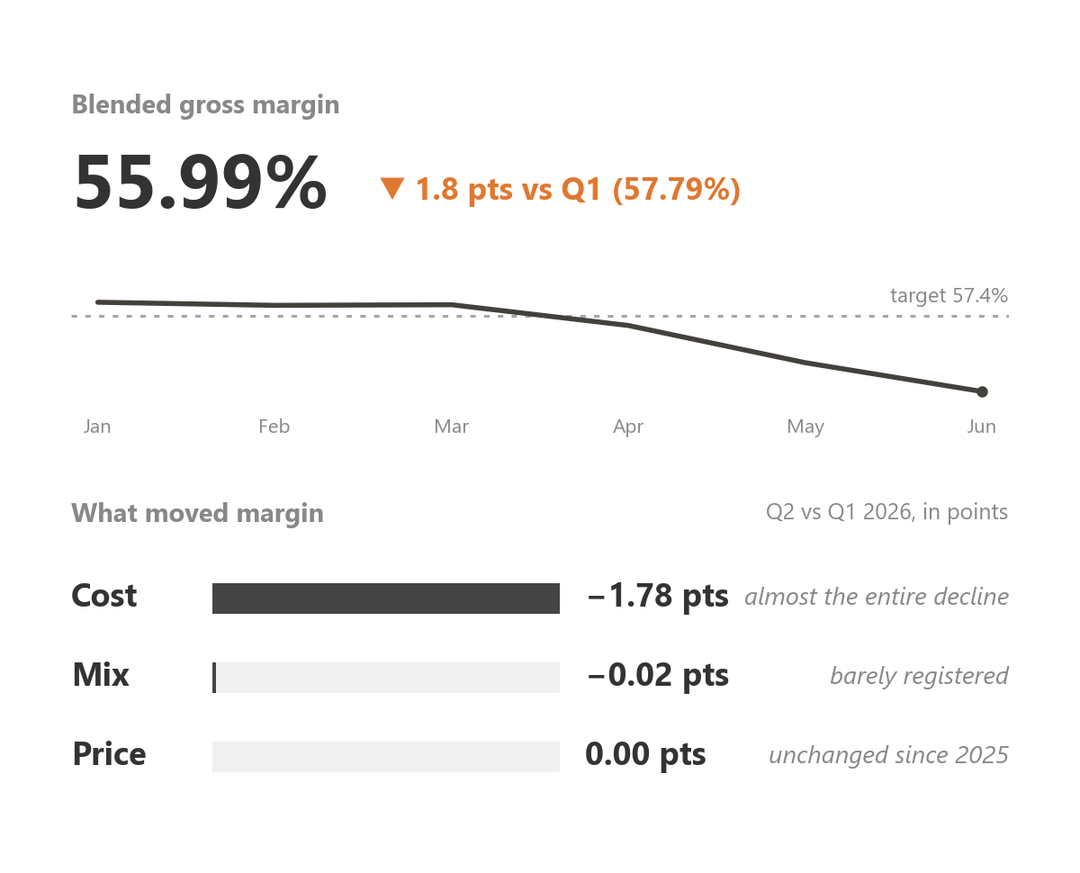
    The team knows margin is off track, and by how much.
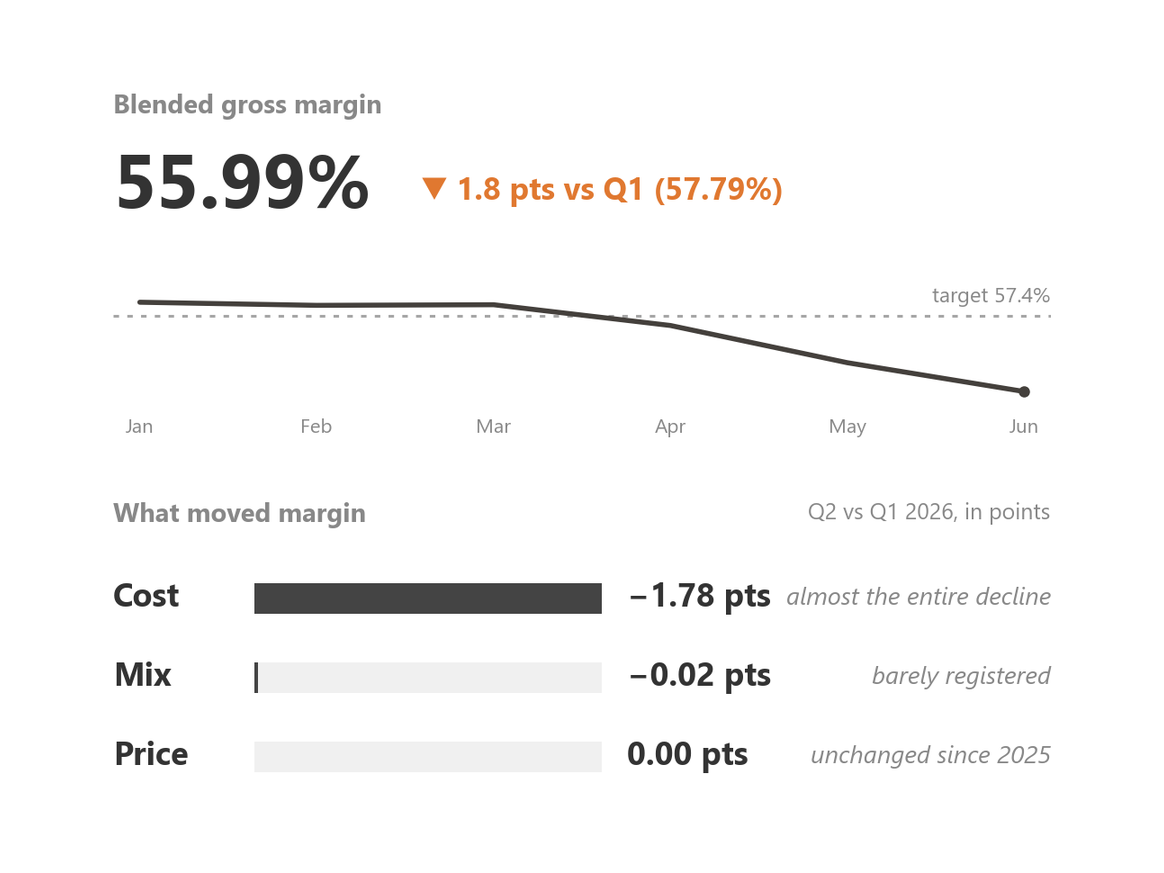
    An alert showing blended gross margin at 55.99%, down 1.8 points, broken into cost, mix and price
  2. What's behind it

    Operations

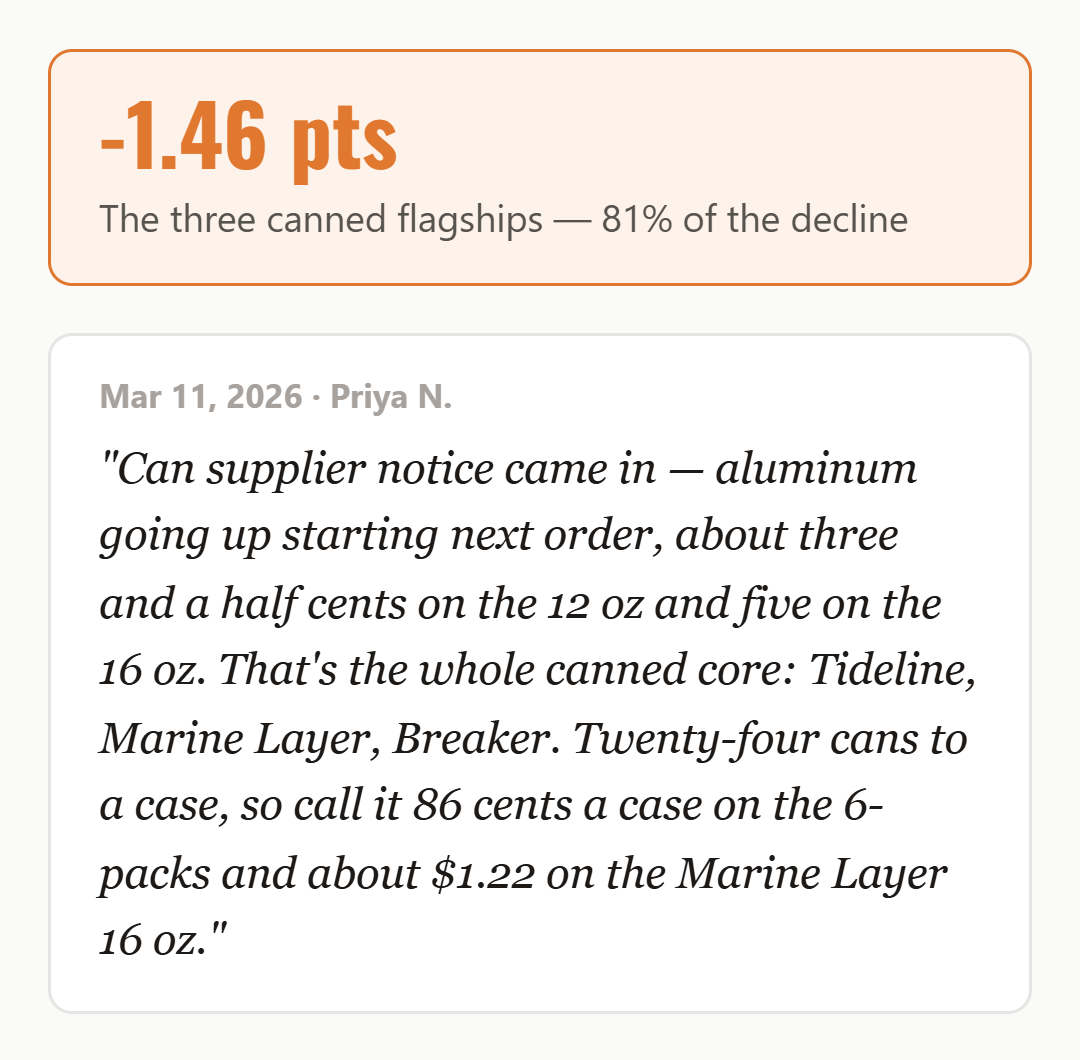
    They can see what's driving it, and what the team already knew, sitting right beside the numbers.
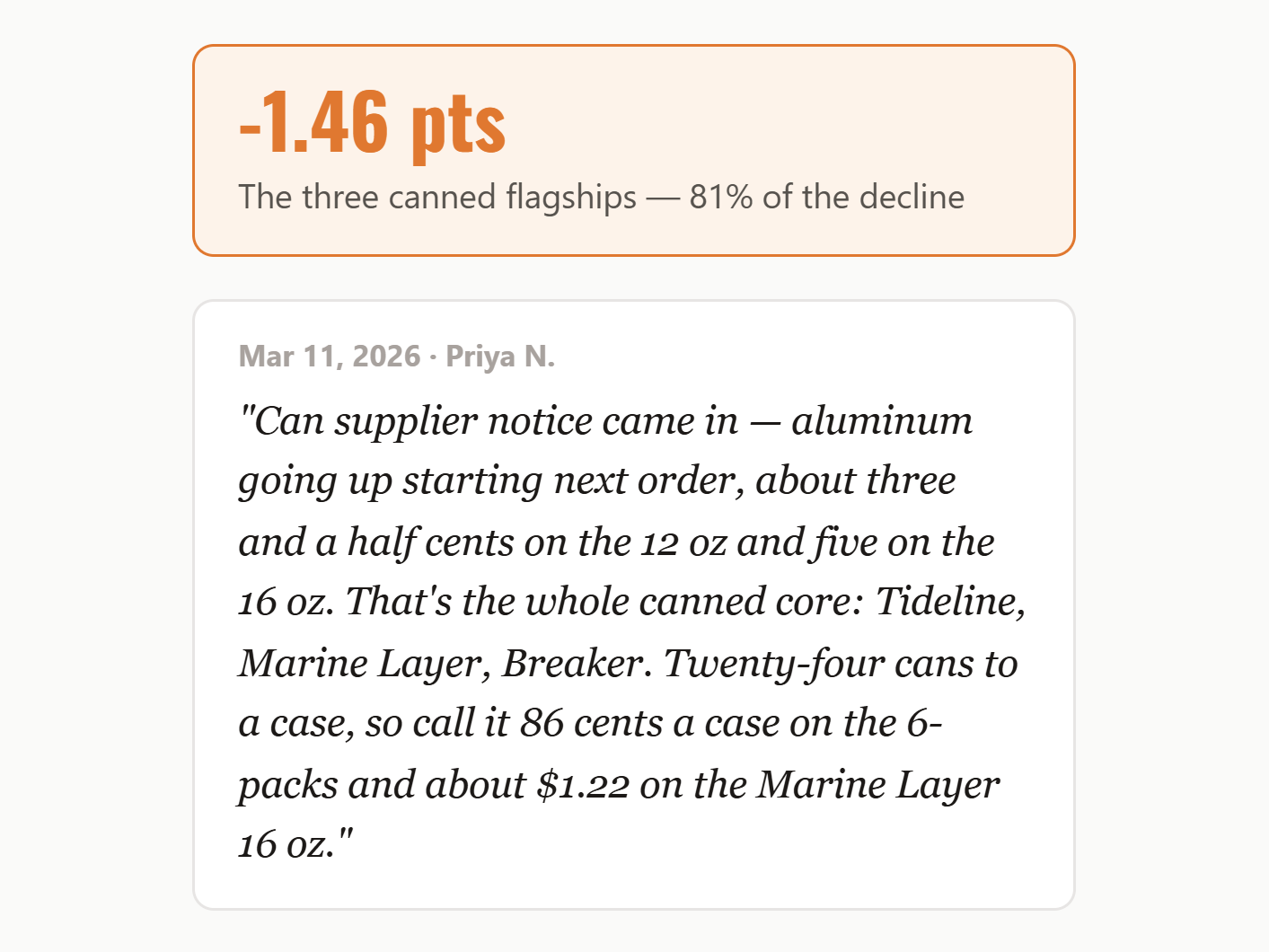
    Three canned beers account for 1.46 of the 1.8 points, next to a note from March about a can price increase
  3. The decision

    The owner and sales

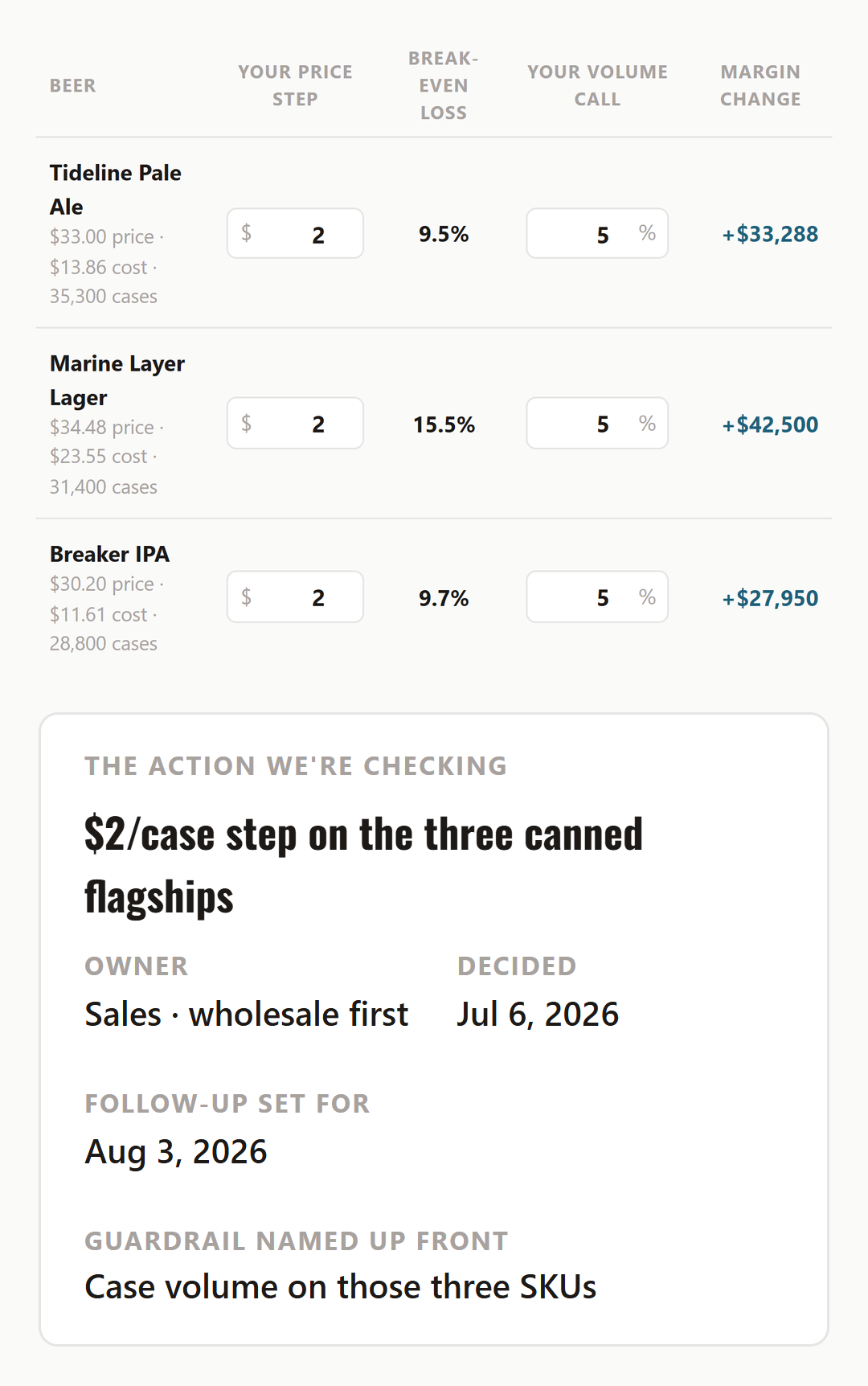
    They work a few scenarios, size the pricing change, and lock in an action with a name and date, so they're able to follow up on it.
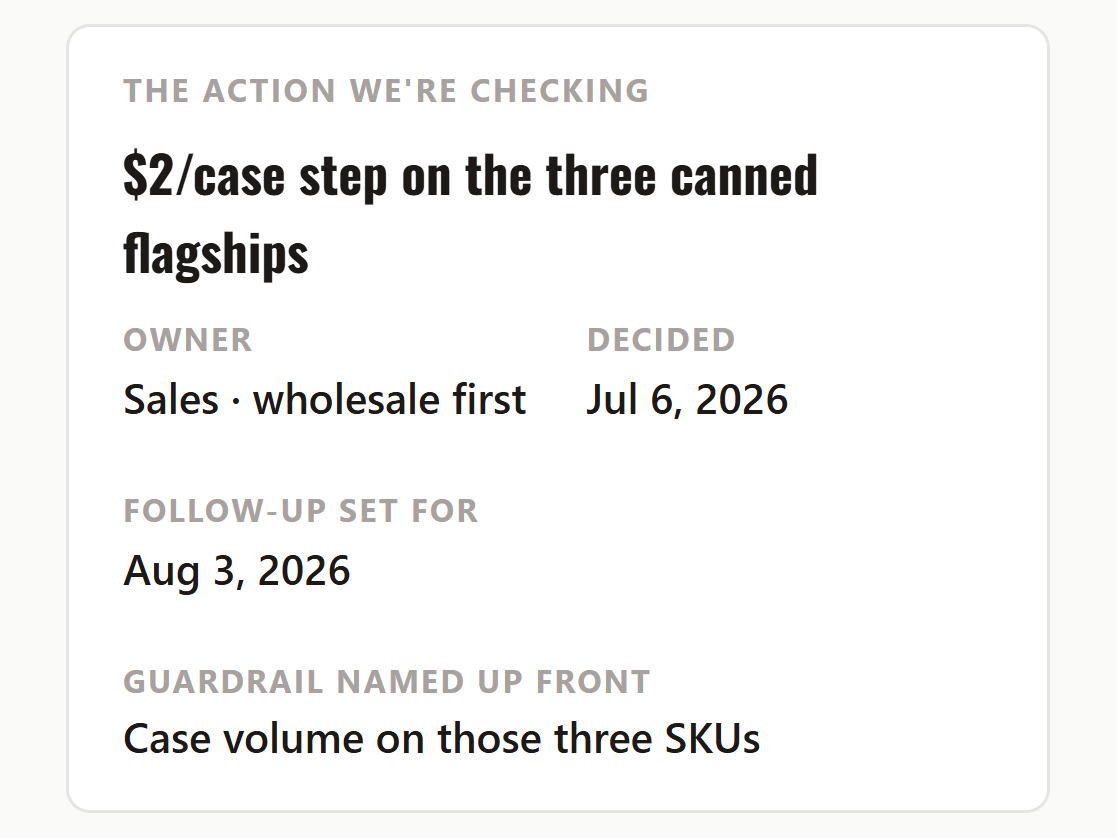
    A price increase sized for each of the three beers, and the decision recorded with an owner, a follow-up date and the number to watch
  4. The check

    Four weeks later, the whole team

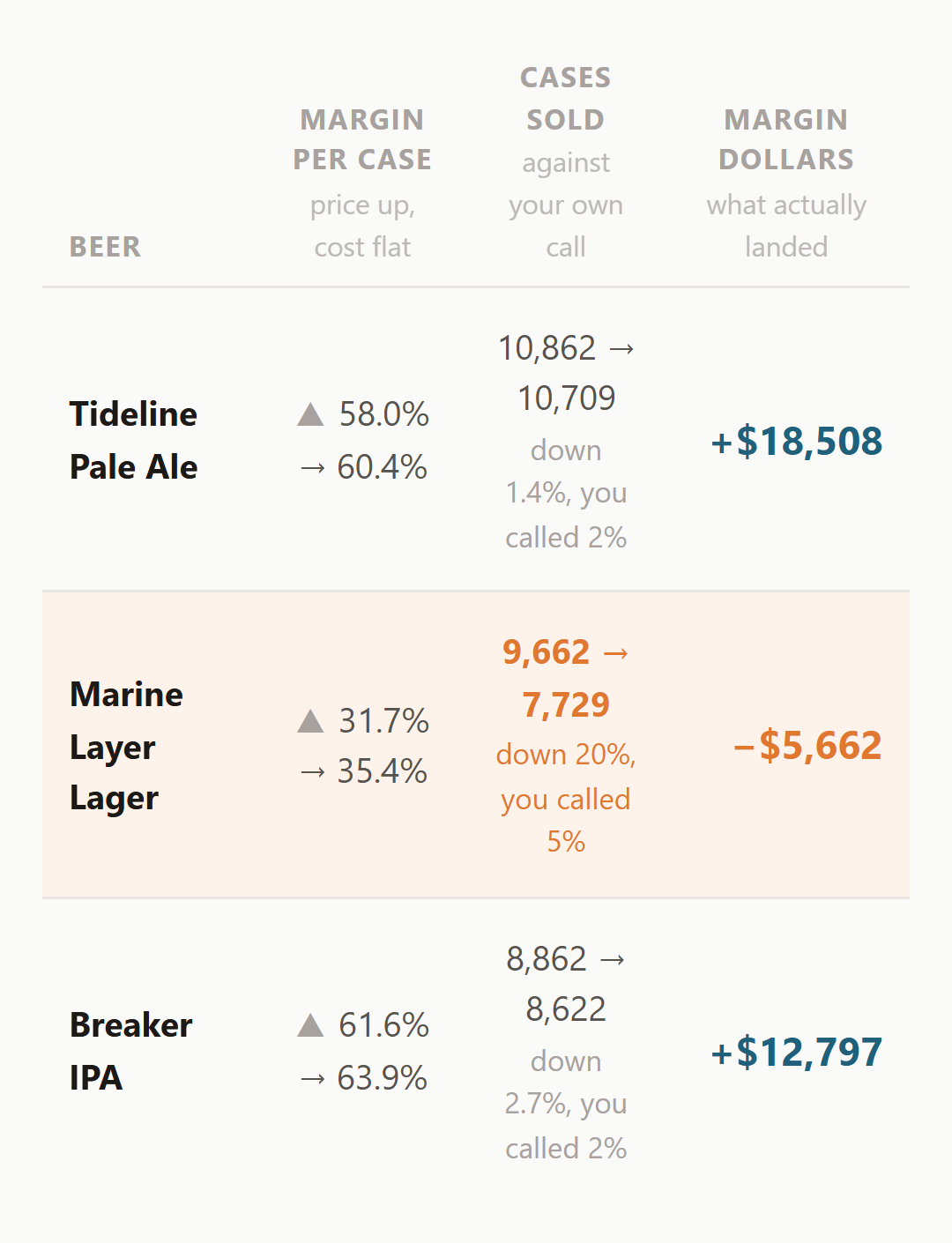
    It checks whether the action worked, and keeps what it learned for next time.
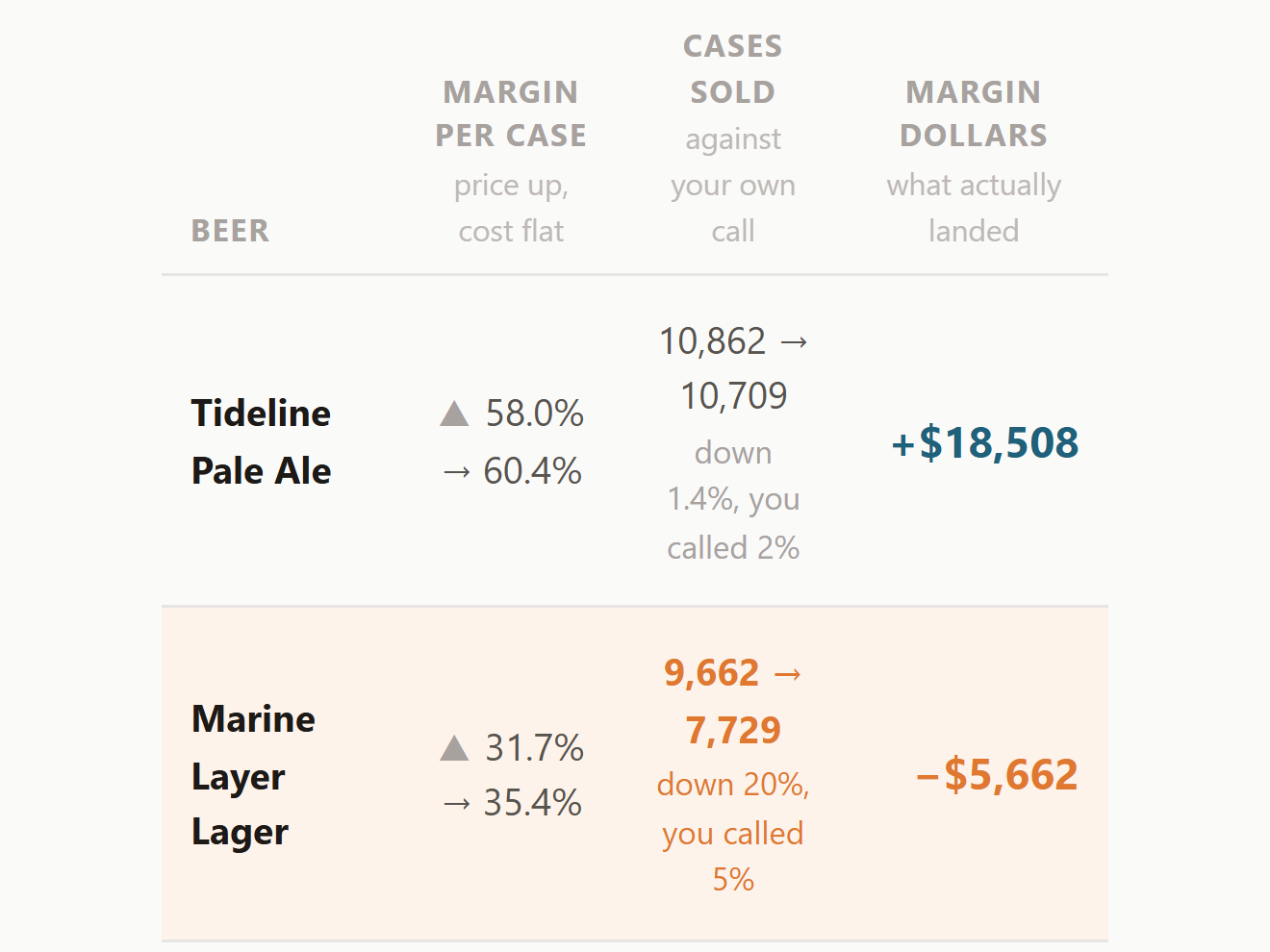
    Four weeks later: margin per case, cases sold and margin dollars for each of the three beers

See more demos at brewerybrain.com →

Jeremy Carney

Beer and technology, in one person.

A lot of the help out there knows beer but not technology, or technology but not beer. I've spent about 20 years in data and technology, and the last few working with more than a dozen breweries and industry partners, so I bring both. What makes it work is the combination: your data, your team's knowledge, an experienced analyst's eye, and AI, all working together.

More on how I work →

Questions brewery teams ask.

Do we have to replace the systems we use now?

No. I connect to the systems and spreadsheets you already use and bring the data together in one place, behind the scenes.

How much of our team's time does this take?

The setup needs an hour or two from whoever knows your systems and the business best, mostly answering some questions from me. After that, it's usually a short look at the insights each week, and you get to spend your time working the initiatives.

Is this a fit for a brewery our size?

This works best for growing breweries with enough going on (several channels, locations or brands) that it's hard to keep track of it all.

Where do we start?

The first step is a 30-minute conversation about where you're looking to take the business and your team. From there, we pick the one question you care most about right now and work on that first.

Let's talk about where you want to take the brewery.

If nothing changes, the scramble keeps setting the week, and the brewery you pictured stays out of reach.

We'll cover where you want to take the brewery, how your team makes decisions today, and where better information could help you make them faster and with more confidence.